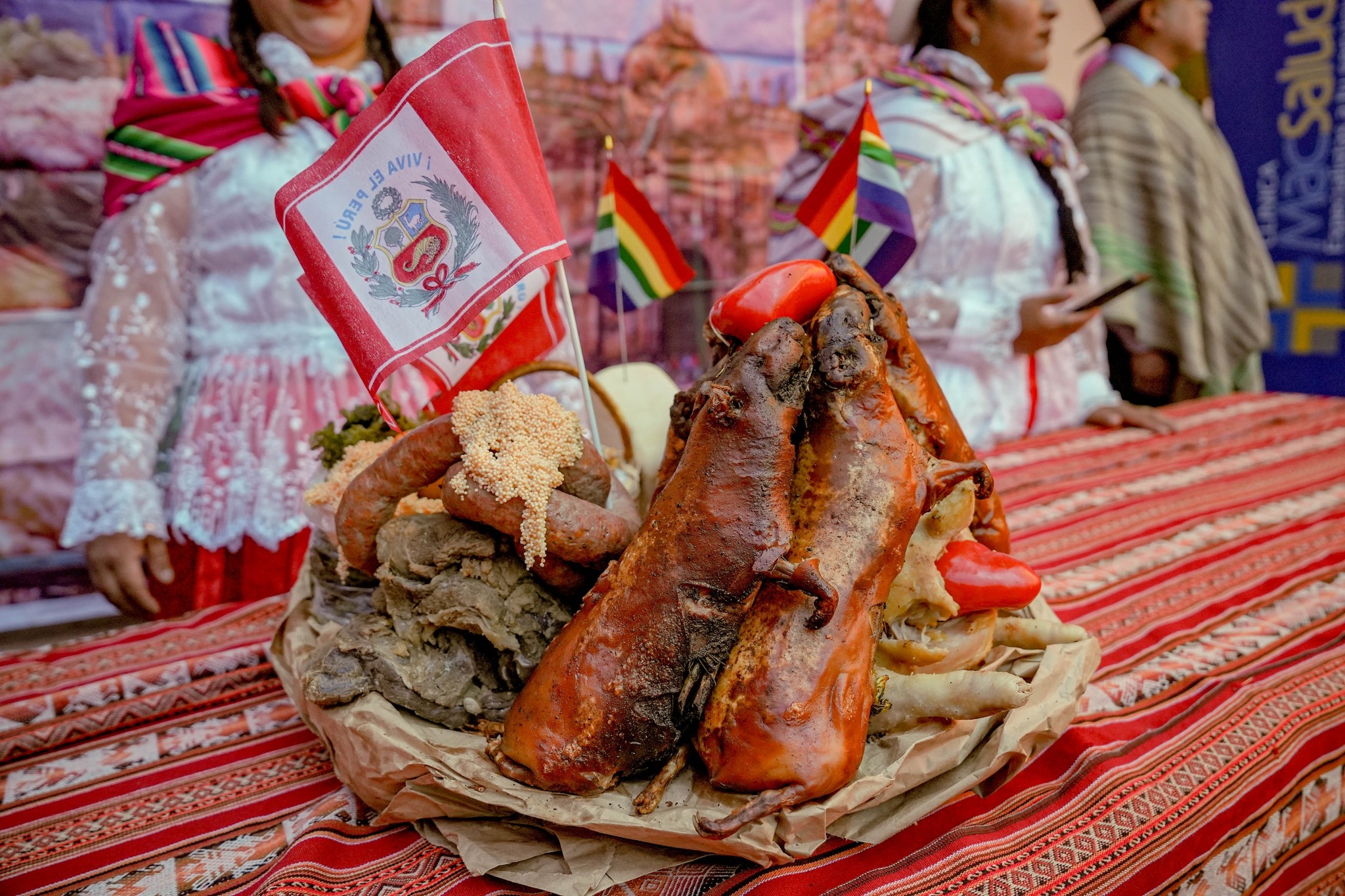
If there is one dish that represents the true essence of Cusqueñan cuisine, it is Chiriuchu. More than just a recipe, it is a tradition passed down from generation to generation that brings thousands of people together every year during one of the city's most important celebrations: Corpus Christi.
The name Chiriuchu comes from Quechua and means "cold chili pepper" or "cold food," as it is traditionally served at room temperature. Its preparation brings together a wide variety of ingredients, including chicken, charqui (dried cured meat), chorizo, cheese, corn fritters (torreja), cochayuyo (seaweed), fish roe, toasted corn (cancha), rocoto pepper, and, of course, guinea pig (cuy)—considered one of the most iconic foods of the Andes.
It is precisely the guinea pig that catches tourists' attention the most. For many foreign visitors, seeing it on a plate is surprising and can even be a bit daunting, as this animal is typically kept as a pet in their home countries rather than eaten. However, those who set their prejudices aside and give it a try discover a unique flavor and a culinary tradition steeped in centuries of history.
Although Chiriuchu can be found year-round in several traditional restaurants around Cusco's Plaza de Armas, it reaches peak popularity in June. During the Corpus Christi festivities, hundreds of local families and thousands of visitors enjoy this signature dish, making it one of the most significant culinary symbols of the region.
Trying a dish isn't just about tasting its ingredients; it's about learning the history, customs, and identity of a culture. In the case of Chiriuchu, every bite tells a piece of Cusco's cultural legacy—a city where tradition remains vibrant and where gastronomy is an experience that goes far beyond flavor.